

Person Centred Therapy for Anxiety
Long-term outcomes often extend beyond anxiety reduction to include greater self-understanding, improved relationships, clearer sense of meaning and purpose, and enhanced capacity to navigate life's challenges. The internal resources developed through person-centred therapy—self-acceptance, emotional awareness, trust in your own experience—continue supporting wellbeing long after therapy ends. You've learned not just to manage anxiety but to relate differently to yourself and your experiences in ways that allow fuller, more authentic living.
Person Centred Therapy vs ACT
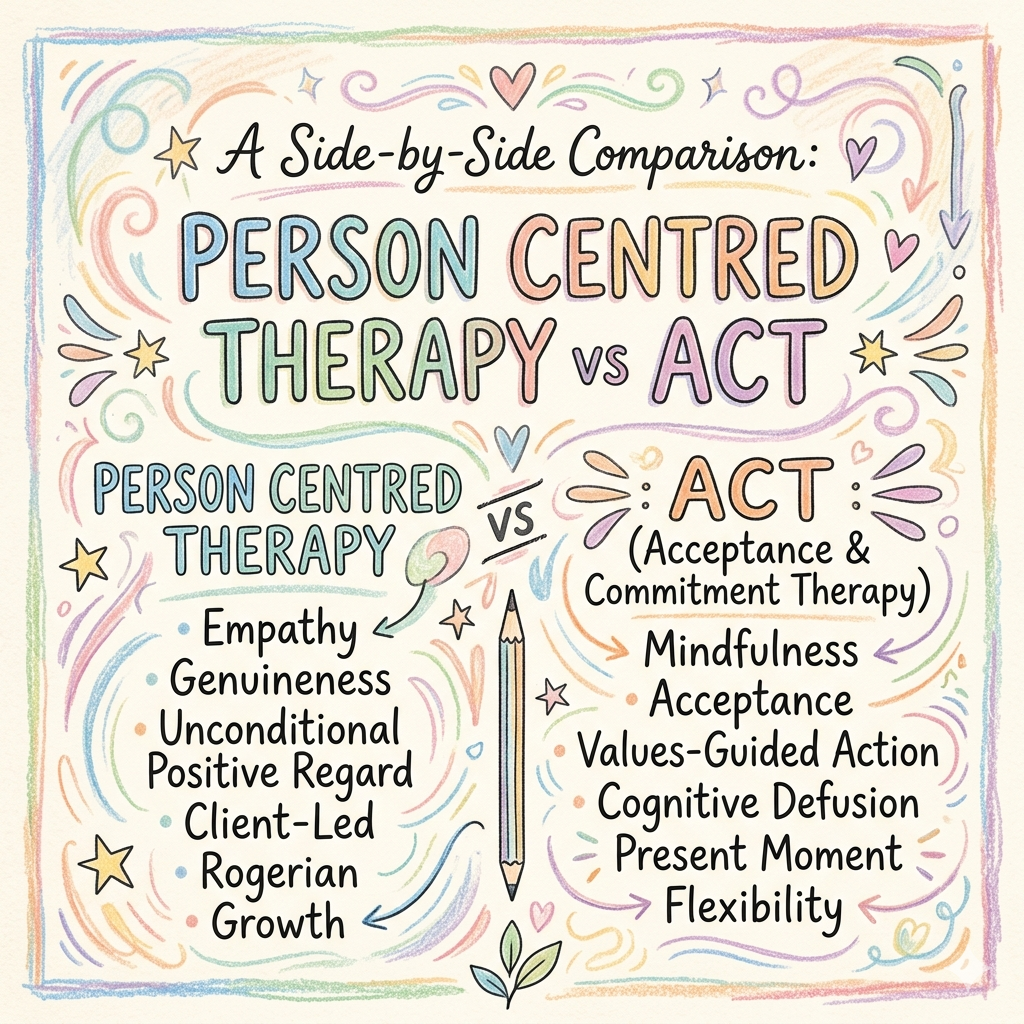
What are you hoping to achieve? If your primary goal is deep self-understanding and authentic living, person-centered therapy aligns with these aims. If you want practical tools for managing specific difficulties whilst living according to your values despite symptoms, ACT suits these goals. Your aims significantly influence which approach fits better.
Is Person Centred Therapy Effective?
Ultimately, the question isn't just whether person-centred therapy is effective in general, but whether it might be effective for you. Your circumstances, preferences, and what you're hoping to achieve all influence this. The evidence suggests that for many people, person-centred therapy provides an effective therapeutic approach that honours their autonomy, validates their experience, and supports meaningful, lasting change. Whether it's right for you requires careful consideration of your own needs and possibly trying it to see how it feels.
Person Centred Therapy for Eating Disorders
Person-centred therapy for eating disorders offers gentle, respectful path towards recovery that honours your autonomy whilst providing the relational healing these complex conditions require
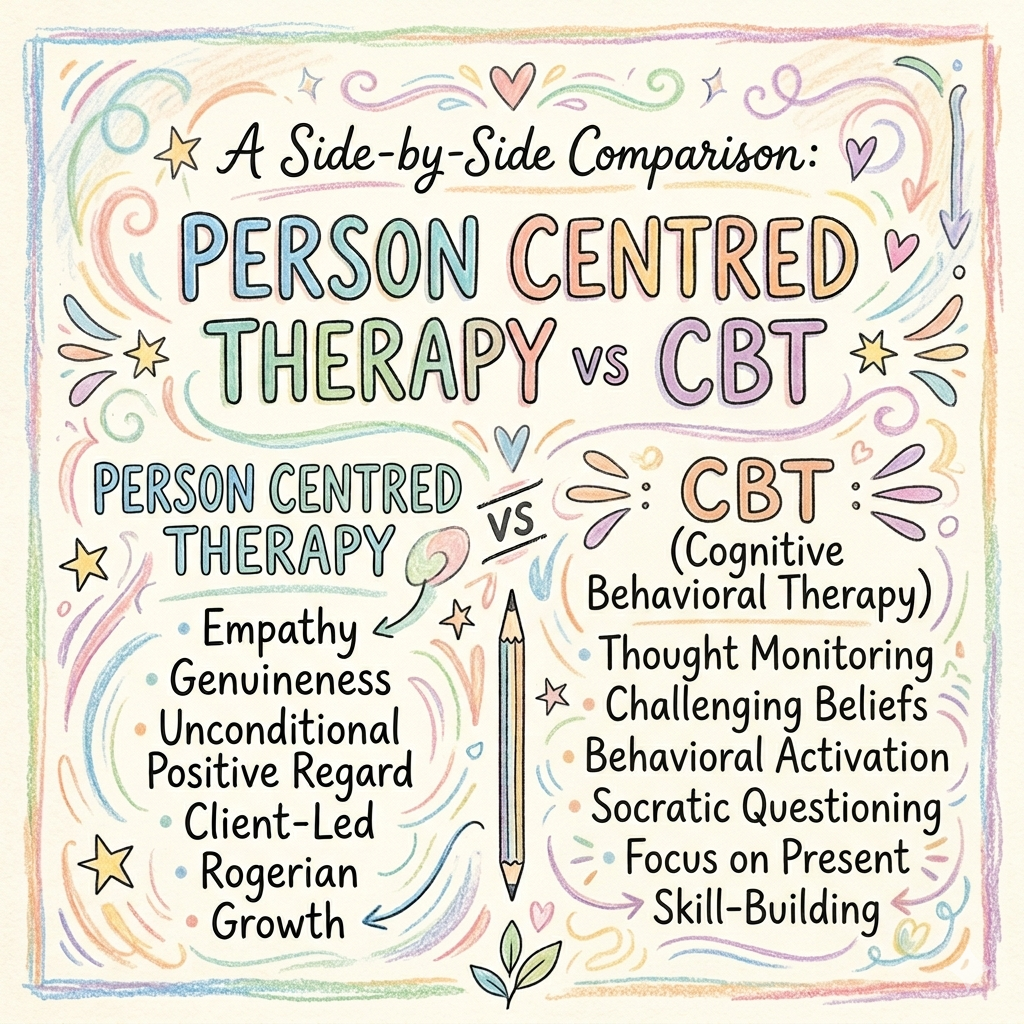
Person Centred Therapy vs CBT
CBT may not suit those who find directive approaches controlling, who want to explore at their own pace, or who seek primarily relational healing rather than skills acquisition. The homework and structured exercises that some find helpful can feel burdensome or disconnected from what others need.
Person Centred Therapy for Low Self Esteem
For many people who've struggled with long-standing low self-esteem, person-centred therapy offers pathway towards genuinely different way of being—one characterised by self-acceptance, authentic living, and belief in your own worthiness. This transformation doesn't happen quickly or without difficulty, but through the patient, accepting presence of person-centred counselling, it becomes possible to move from pervasive inadequacy towards fuller, more compassionate engagement with yourself and life.
Why a Person Centred Approach is Important in Therapy
when we treat people as equal partners in their own care, respecting their autonomy, listening to their voices, and tailoring support to their individual needs and preferences, everyone benefits. Person-centred care isn't simply important—it's the foundation of meaningful, effective support that recognises the fundamental humanity we all share.
Person Centred Therapy: Advantages and Disadvantages
person-centred therapy offers a profoundly respectful, humanistic approach that has helped countless people develop greater self-acceptance, navigate difficulties, and live more authentic lives. Its advantages—the emphasis on the therapeutic relationship, respect for client autonomy, and trust in people's innate capacity for growth—resonate with many. Its limitations—the less directive approach, gentler pace, and lack of specific techniques—mean it won't suit everyone. Understanding both helps you make the choice that's right for you.
Person Centred Therapy for Depression
The therapeutic relationship—which person-centred work prioritises—consistently emerges as one of the strongest predictors of positive outcomes across all types of therapy. For many people, the experience of being truly heard and accepted creates conditions in which depression's grip gradually loosens, allowing reconnection with hope, meaning, and life itself.
Person Centred Therapy for PTSD
Healing from trauma takes time regardless of approach. Person-centred therapy typically unfolds gradually, with changes occurring organically rather than following predetermined timelines. This patience with the healing process respects trauma's profound impact whilst trusting your own capacity for recovery. For many survivors, this gentle, respectful approach to their trauma and their personhood creates conditions where genuine healing finally becomes possible.
Person Centered Therapy for Trauma
Healing from trauma takes courage, time, and patience regardless of approach. Person-centered therapy offers a particular path—one grounded in trust in your own healing capacity, respect for your autonomy, and belief in relationship's power to repair what trauma has damaged. For many individuals carrying traumatic experiences, this gentle, respectful approach creates conditions where genuine healing finally becomes possible, allowing movement from mere survival towards fuller, more authentic living.

EMDR Therapy or Person Centred Therapy - Which Is Right for Me?
Both EMDR and person-centred therapy can be effective; which works better depends on you, your situation, and what you need right now. Remaining open to either approach, or to combining both, allows flexibility in finding what truly helps your particular journey towards healing and growth.
Person Centred Therapy for Bereavement
person-centred therapy for bereavement offers gentle, respectful accompaniment through one of life's most difficult experiences. The approach trusts your own capacity to heal and grow through loss, whilst providing the accepting, understanding relationship that makes this possible. Bereavement counselling offers support not to eliminate grief—which would be neither possible nor desirable—but to help you carry it whilst gradually finding ways to live meaningfully despite your loss. For many bereaved people, this compassionate, person-centred approach provides exactly the support they need to navigate their unique journey through grief.
Person Centered Therapy for Loneliness
Loneliness represents one of the most painful human experiences—a profound sense of disconnection that can persist even when surrounded by people. It's not simply being alone; it's feeling fundamentally separate from others, unable to truly connect, or convinced that nobody genuinely understands you. This isolation affects every aspect of life, contributing to depression, anxiety, and a pervasive sense that something essential is missing from your existence.
Person Centred Therapy and Attachment Theory
Attachment theory explains how early relationships with caregivers shape our capacity for connection, emotional regulation, and sense of self throughout life. Bowlby proposed that infants develop internal working models of relationships based on whether their caregiver responds sensitively and consistently to their needs. When a child experiences reliable, attuned care, they typically develop secure attachment—a foundation of trust that supports healthy relationships and emotional wellbeing across the lifespan.
Strengths and Weaknesses of Person Centred Therapy
person-centred therapy offers distinctive strengths—profound respect for autonomy, healing through genuinely accepting relationship, addressing underlying factors maintaining difficulties, supporting authentic living beyond mere symptom reduction. These strengths make it powerfully helpful for many people. Its limitations—slower pace, non-directive stance that frustrates some, reliance on relationship rather than techniques—mean it won't suit everyone or every situation. Understanding both the considerable advantages and genuine challenges helps you make informed, thoughtful choice about whether this nurturing, humanistic approach to therapy might support your particular journey towards greater wellbeing, self-acceptance, and authentic engagement with life.
How Long Does Person Centred Therapy Last?
One of the most common questions people ask when considering person-centred therapy is "how long will it take?" This seemingly straightforward question doesn't have a simple answer. Unlike some therapeutic approaches that follow fixed protocols with predetermined session numbers, person-centred counselling operates quite differently regarding treatment duration and treatment length considerations.
EMDR Therapy for Narcissistic Abuse
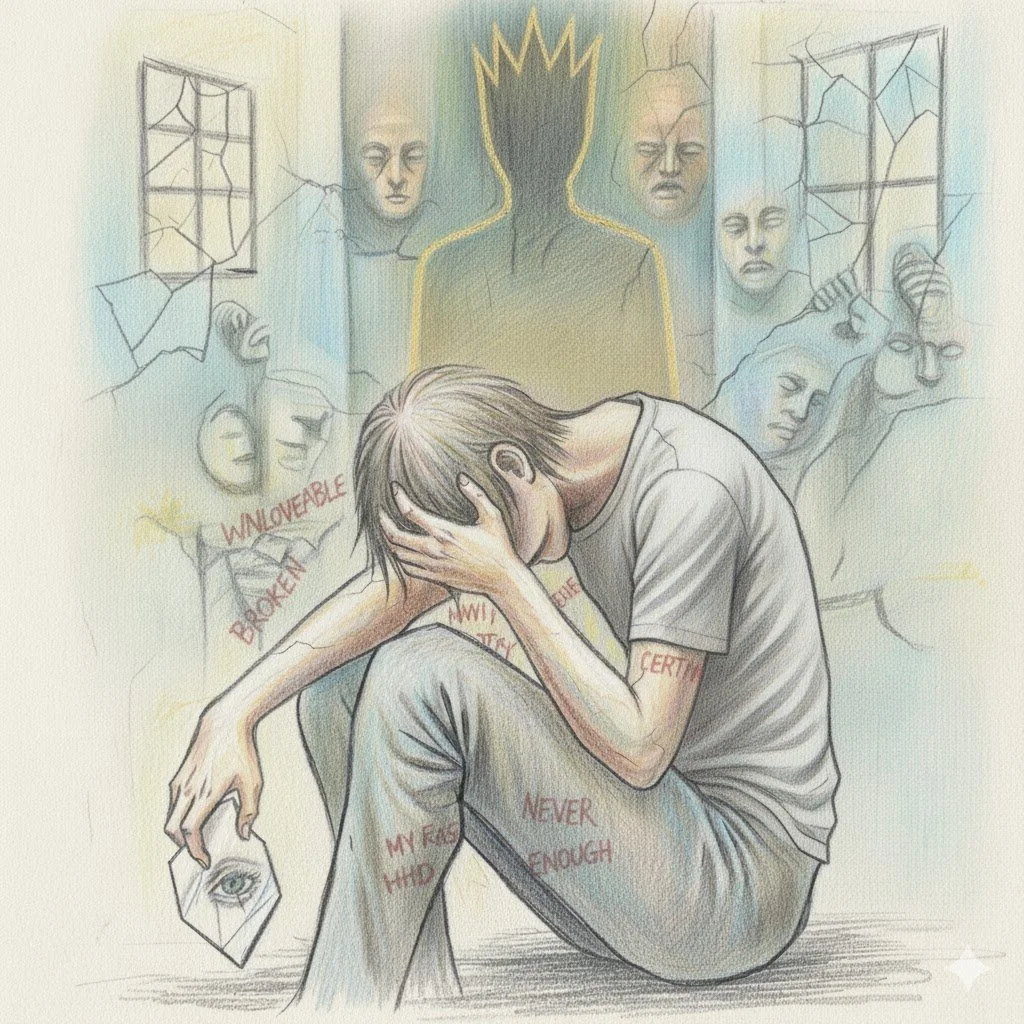
The patterns of narcissistic abuse typically include manipulation, gaslighting, emotional invalidation, intermittent reinforcement, and systematic erosion of the victim's self-esteem and sense of reality. Unlike more overt forms of domestic violence, narcissistic abuse often operates subtly, making it difficult for survivors to recognise or name their experience. The relational trauma that results can be deeply destabilising, affecting survivors' ability to trust themselves, form healthy relationships, and maintain emotional wellbeing.

How does it work? An EMDR therapy session example
The session begins with the therapist checking in about Sarah's week and ensuring she feels ready to engage in processing work. The therapist reviews the coping resources Sarah learned during preparation, including her "safe place" visualisation and grounding techniques. This brief check-in helps establish that Sarah is in an appropriate mental and emotional state for trauma processing. The therapist explains what will happen during the session and reminds Sarah that she can signal if she needs a break at any point.
EMDR Therapy for Phobias
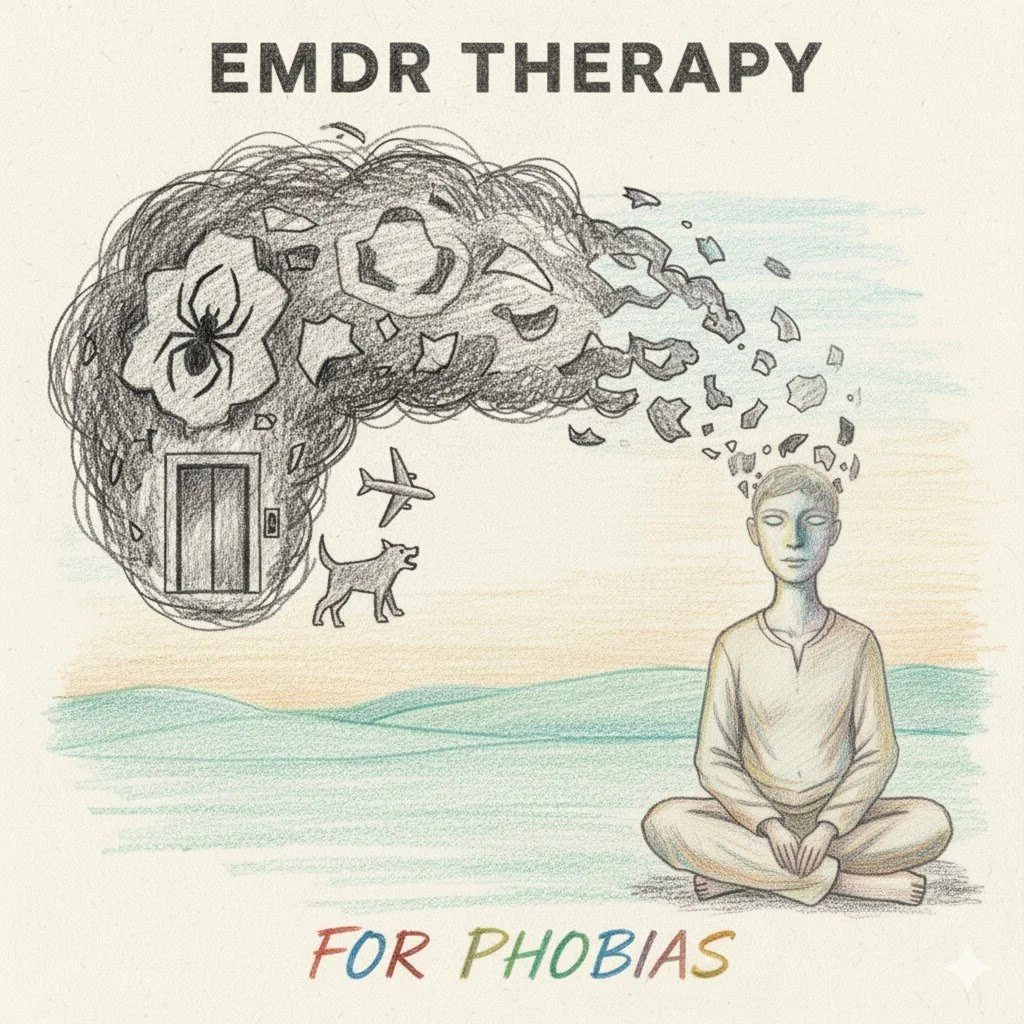
Traditional phobia treatment has primarily relied on exposure-based approaches, gradually confronting individuals with their feared phobic stimulus or phobic object. Whilst effective for many, some people find these methods too distressing or fail to achieve lasting results. This has led clinicians to explore alternative approaches, including Eye Movement Desensitisation and Reprocessing (EMDR), which offers a different pathway to resolving phobic responses.